
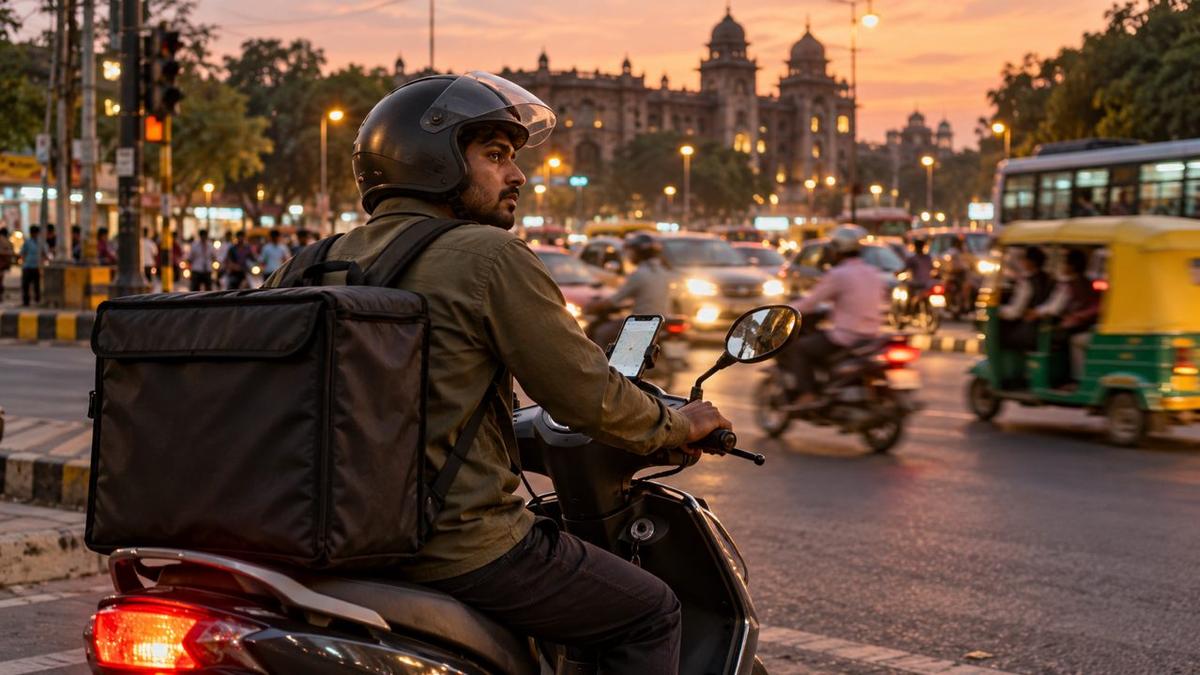
If you deliver food, drive a cab through an app or take freelance tasks from a platform, 2026 is the year your work finally got a legal address. This guide explains what gig workers social security rules in India now say, who qualifies, what platforms must do, and which promises are still waiting for a government notification. We stick to what the law and the Social Security (Central) Rules, 2026 actually contain, and we flag clearly where the benefit itself has not arrived yet.
Where gig workers social security stands in late 2026
The Code on Social Security, 2020 was the first central law to define gig workers and platform workers. According to an analysis by Taxmann, the bulk of the Code was brought into force on 21 November 2025. The detailed operating rules followed later: the Ministry of Labour and Employment notified the Social Security (Central) Rules, 2026 on 8 May 2026, and they took effect the same day, as reported by MediaNama and in a legal update by Anhad Law.
Put simply, the legal framework is now live, the registration machinery is running, and platforms have hard deadlines. What is still missing is the money side: the actual welfare schemes and the date from which platforms start paying into the fund. Keep that distinction in mind whenever you read a headline promising instant insurance or pensions.
Scale matters here. NITI Aayog estimated India's gig workforce at 7.7 million in 2020–21 and projected it to reach 23.5 million by 2029–30, figures cited by MediaNama in its May 2026 coverage. Meanwhile, the e-Shram portal for unorganised workers had more than 31.78 crore registrations as on 14 July 2026, according to the Minister of State for Labour and Employment in a written Lok Sabha reply, as reported by The News Mill with ANI inputs.
Who counts as eligible: the 90-day and 120-day test
Being on an app is not enough. Under the 2026 Rules, a gig or platform worker becomes eligible for benefits only after being engaged for at least 90 days with a single aggregator, or at least 120 days in total across several aggregators, during the previous financial year. The Central Government may add further conditions.
How a working day is counted
The counting rule is generous on one point. A calendar day counts as an engaged day if you earn any income from an aggregator that day, whatever the amount. If you work for two or three platforms on the same day, that day is counted separately for each of them when the cumulative total is worked out. A short evening shift therefore counts for as much as a full day on the road.
Other conditions to watch
- Registration: unorganised workers above 16 years of age register through an Aadhaar-linked self-declaration.
- Keeping details current: workers who do not update their address, occupation, mobile number or skills can lose scheme eligibility.
- Annual reset: missing the day threshold in a financial year means losing eligibility for the following cycle.
- Age: MediaNama reports that eligibility ends when a worker turns 60.
One practical caution: MediaNama also notes that platform disclosures suggest the average delivery partner works fewer than 40 days a year. Many casual riders will therefore fall short of the threshold, so a weekend-only partner should not assume automatic cover.
Worked example: does your year qualify?
Take two hypothetical delivery partners in a metro city and look back at financial year 2025–26.
Partner A worked 70 days only on App One, 30 days on both App One and App Two, and 10 days only on App Two. With App One alone, that is 70 + 30 = 100 days, which already clears the 90-day bar. Even on the cumulative route, the count is 70 + (30 × 2) + 10 = 140 days, above 120. Partner A qualifies either way.
Partner B worked 50 days only on App One, 25 days on both apps, and 5 days only on App Two. With App One alone, that is 75 days, short of 90. Cumulatively it is 50 + (25 × 2) + 5 = 105 days, short of 120. Partner B does not qualify for that cycle, even though the partner earned on 80 separate calendar days.
The lesson: track your own days. Screenshots of daily earnings from each app are a cheap insurance policy if a platform's records ever disagree with yours.
What platforms must now do
Most of the heavy lifting under the 2026 Rules falls on aggregators. The table below compares the duties of workers and platforms side by side.
| Item | Gig or platform worker | Aggregator (platform) |
|---|---|---|
| Registration | Aadhaar-linked self-declaration on the central portal (age above 16) | Register on the designated central portal and share details of workers already engaged within 45 days of the Rules starting |
| Ongoing updates | Keep address, mobile number, occupation and skills current | Report new workers and exits in real time or daily via API or other electronic mode; refresh worker details periodically |
| Eligibility record | 90 days with one aggregator or 120 days across several in the previous financial year | Maintain engagement data that feeds the eligibility count |
| Money | No worker contribution to this fund is described in the sources we reviewed | Provisional contribution in Form-XX by 30 June; final return with any balance in Form-XXI by 31 October |
| Delay | Risk of losing eligibility if details are stale | Interest of 1% per month or part of a month on late contributions |
The 45-day window ended on 21 June 2026. The Tribune reported on 29 June 2026 that aggregators had sought more time, citing unclear benefits, but the deadline was not extended. A ministry official told the paper that around 10 to 12 lakh workers had been on-boarded and that 20 aggregators, including Zomato, Swiggy and Uber, had registered, while adding that the aggregators were yet to register their entire workforce.
Which platforms are covered
The Seventh Schedule of the Code lists the categories of aggregators that can be asked to contribute: ride sharing; food and grocery delivery; logistics; e-marketplaces for goods or services (both marketplace and inventory models); professional services providers; healthcare; travel and hospitality; content and media services; and any other goods and services provider platform. In practice, that net catches almost every app-based job a young Indian worker is likely to take.
The contribution formula and its cap
Section 114 of the Code sets the funding rule. Each covered aggregator pays a rate notified by the Central Government that is not less than 1% and not more than 2% of its annual turnover. There is a ceiling: the contribution cannot exceed 5% of the amount the aggregator pays or owes to gig and platform workers. According to the Rules, as summarised by MediaNama, turnover excludes taxes, cess and surcharges payable to the Central Government.
A hypothetical illustration shows why the cap matters. Imagine a platform with annual turnover of ₹500 crore after excluding central taxes, which pays ₹40 crore to its delivery partners. At 1%, the turnover-based figure would be ₹5 crore; at 2%, ₹10 crore. But 5% of the ₹40 crore paid to workers is only ₹2 crore, so the contribution is capped at ₹2 crore whichever rate is notified. For platforms with large turnover and a smaller worker payout, the cap, not the rate, decides the bill.
The crucial caveat: Section 114(5) says the date contributions begin must itself be notified. Taxmann's analysis, with its legal position stated as of 7 September 2026, found that neither the rate nor the start date had been notified by then, even though Rule 49 has already laid down the forms and payment dates.
Benefits promised, benefits delivered
Section 114(1) lets the Central Government frame schemes for gig and platform workers on life and disability cover, accident insurance, health and maternity benefits, old age protection, crèche facilities and any other benefit it decides. These are enabling powers, not ready-made schemes.
When the Rules were notified in May 2026, MediaNama reported that no benefit scheme had yet been notified under Section 114, and that the only announced benefit, Ayushman Bharat health cover from the Union Budget 2025–26, had not yet been launched for platform workers. Until a scheme is notified, registration builds your record rather than paying out cash.
Joint Secretary Ashutosh Pednekar told The Tribune that the aggregator databases and e-Shram “will communicate with each other”, and described gig work as a major source of youth employment. That interlinking is what should eventually let your benefits follow you from one app to the next.
What to do now if you work on apps
- Register on e-Shram if you have not already, and note your Universal Account Number.
- Check that each platform has listed you; ask support for confirmation in writing if you are unsure.
- Keep a simple day log per app for the current financial year.
- Update your mobile number and address whenever they change.
- Plan beyond one app. If gig work is a bridge, keep a polished CV ready with our free resume builder and browse current jobs in India.
Seasonal peaks bring the most app work; our guide to festive season hiring in India covers that side, and our look at the latest unemployment rate explains why so many young people are turning to platform work.
FAQ on gig workers and social security
Am I covered if I work for only one app on weekends?
Only if you reach 90 engaged days with that app in the previous financial year. Weekend-only work rarely gets there, which is why tracking days matters.
Does a short shift count as a full day?
Yes. Under the 2026 Rules, any income earned from an aggregator on a calendar day makes it an engaged day, whatever the amount.
Do I have to pay anything into the fund?
The Code places the contribution on aggregators, at 1% to 2% of turnover, capped at 5% of what they pay workers. None of the sources we reviewed describe a matching worker contribution to this fund.
Has any insurance or pension started yet?
Not as a notified Section 114 scheme as of the sources we checked. The legal powers and registration system exist, but the specific schemes and the contribution start date still await notification.
What happens if a platform pays late?
Late contributions attract interest of 1% per month or part of a month, and excess payments can be refunded within 90 days of a claim.
Which types of apps fall under the law?
The Seventh Schedule lists ride sharing, food and grocery delivery, logistics, e-marketplaces, professional services, healthcare, travel and hospitality, content and media, and other goods and services platforms.
Conclusion
India now has a working legal skeleton for gig workers: a definition in law, an eligibility test based on days worked, a registration portal and strict reporting duties for platforms. The flesh, meaning notified schemes and a start date for platform contributions, is still pending. For workers, the smart move is to register, check that each app has listed you, and keep your own record of engaged days, so that you are first in line once the benefits arrive. Want a steadier option alongside app work? Try asking an AI assistant to shortlist roles, as our ChatGPT job search guide explains.
Sources: Code on Social Security, 2020, Section 114 and Seventh Schedule (bare act text, AdvocateKhoj; Taxmann analysis, September 2026); MediaNama report on the Social Security (Central) Rules, 2026 (May 2026); Anhad Law update via Legal500 (8 May 2026); The Tribune (29 June 2026); The News Mill with ANI, on the Lok Sabha written reply of July 2026.